Wet Carpets and AWD Warnings: What Rainy Season Does to European Cars in Longview
From October to about May, Longview gets rain most days. Most cars shrug that off. European cars have a few design habits that make our wet months harder on them, and the problems they cause tend to show up slowly and get expensive quietly.
We covered the basics of European auto repair in Longview in our last post. This one is narrower. These are the three wet-season issues we'd want every Audi, VW, BMW, Volvo and Mercedes owner in Cowlitz County to know about before winter really settles in.
1. Clogged Sunroof Drains and the Mystery Wet Floor
A sunroof isn't sealed watertight. It's designed to let some water past the glass and catch it in a tray, which empties through small rubber tubes running down the inside of the pillars. Most cars have four of them.
Around here, those tubes clog with fir needles, moss, pollen and the little helicopter seeds off maple trees. Once a drain backs up, the tray overflows into the headliner and the water follows the pillar down into the footwell. Owners usually notice it as:
- Carpet that's damp or squishy, often on the front passenger side or behind the front seats
- A musty smell that doesn't go away
- Windows that fog up and won't clear, even with the defroster on
- A water stain or drip near the grab handles or dome light
The wet floor isn't the expensive part. On some European models, control modules and wiring connectors sit low in the footwell or under the seats. Water that sits there for weeks corrodes connectors and can lead to strange electrical problems like locks that act up, warning lights, or windows that stop working.
The drains under the windshield wiper cowl can clog the same way. When they do, water can get into the cabin air intake and, on some models, the area where electronics are mounted.
A word of caution if you want to clear the drains yourself. Blasting compressed air down the tube can pop it off its fitting inside the pillar. Then the water drains directly into the car, and getting to the tube means pulling interior panels. Low pressure or a length of trimmer line works better. If you'd rather not risk it, we can check and clear them during any visit. Once a year in the fall, before the heavy rain, is a good habit if you park under trees.
2. AWD Systems Need Fluid Too
Many drivers assume all-wheel drive takes care of itself. It mostly does, until a part nobody remembered to service wears out.
European brands use a few different AWD designs, and each has its own needs:
Haldex style couplings. VW's 4MOTION on models like the Tiguan, Atlas and Golf R, Audi's quattro on the A3, Q3 and TT, and most Volvo AWD models use an electronically controlled clutch coupling at the rear axle. It runs on its own small supply of fluid, and some versions have a filter. When that fluid gets old or the pump clogs, the rear wheels stop getting power. The car quietly becomes front wheel drive. Often the only sign is front tires spinning when you pull away on wet pavement, or an AWD message on the dash.
BMW xDrive. xDrive uses a transfer case with a clutch pack that's constantly adjusting power front to rear. Worn fluid or mismatched tires make it work harder than it should. A common complaint is a shudder, bind or groan during slow, tight turns like pulling into a parking spot.
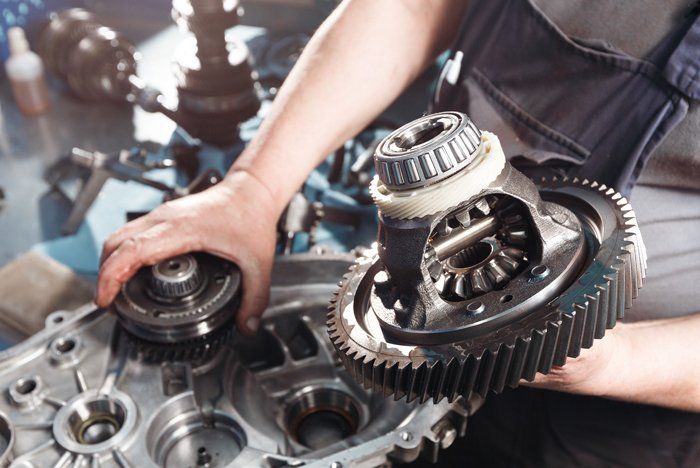
Audi quattro on larger models and Mercedes 4MATIC. These use center differentials and transfer cases that are tougher, but the front and rear differentials still have fluid that breaks down over time.
Service intervals vary a lot by model, and some of these fluids are called "lifetime" in the paperwork. In our experience, lifetime usually means the life of the warranty. If your AWD car is past 50,000 miles and nobody has touched the coupling, transfer case or differential fluid, it's worth having us look up the schedule and check it. It's a lot cheaper than a coupling or transfer case. We handle these alongside our transmission service.
3. You Can't Just Replace One Tire
This one catches people every winter. A nail or a pothole on a rainy night ruins one tire, and the obvious fix is to buy one new tire and move on.
On a front wheel drive car, that's usually fine. On most AWD European cars, it can cause real damage. A new tire is slightly taller than three worn ones, so it turns at a different speed. The AWD system reads that as slip and works constantly to correct it. Over thousands of miles, that wears out clutch packs, couplings and differentials.
Most manufacturers want all four tires to be the same brand, model and size, and within a few 32nds of an inch of tread depth of each other. The exact number depends on the brand. If only one tire is damaged and the others still have plenty of tread, many tire shops can shave a new tire down to match. If the others are worn, replacing all four is the safer call.
The best prevention is cheap. Rotate the tires regularly so they wear evenly, and check tread depth before the rainy season starts. Worn tires also lose their grip on wet roads well before they hit the legal minimum.
Bring Your European Car to Industrial Way
Art's Automotive has been fixing cars in Longview since 1965, and our ASE Certified Master Technicians include a tech who specializes in European makes. We're at 1320 Industrial Way, open Monday through Friday from 7:30 AM to 5:00 PM, and we see drivers from Kelso, Castle Rock, Rainier, St. Helens, Clatskanie, Vader and Winlock.
If you've got a wet floor, an AWD warning, or a tire question before you buy, call (360) 423-0890 or
schedule online. Tell us your year, make and model and we'll have the right fluids and parts ready. Every repair carries our 36-month/36,000-mile warranty.